


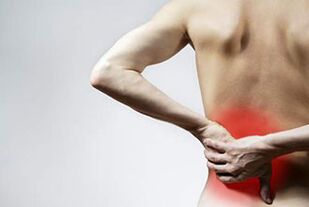
Back pain in the lumbar region is common.Around the age of 30, these sensations occur in 70% of people, regardless of the type of job, lifestyle and physical activity.Ignoring lower back pain leads to serious undesirable health consequences, since these symptoms already indicate disturbances in the functioning of the body.
During a consultation with a neurologist:
- Performs an inspection;
- Listens to patient complaints;
- Make a preliminary diagnosis;
- If necessary, will refer for further research;
- will prescribe individual treatment.
Causes of lower back pain
The causes of back pain in the lumbar region differ in their etiology of origin and require determination of the pain zone and analysis of the character.It is customary to differentiate:
- epicritic pain - severe back pain in the lower back with a distinct focus;
- protopathic pain - throbbing, aching pain that reflects diseases of other anatomical areas.
The frequency of occurrence, duration of pain and the area affected are important.Often the back fails due to:
- age-related changes, which reduce the ability of the spine to perform shock-absorbing functions;
- stress while carrying a child;
- vertebral displacement, trauma, and compression fractures;
- spinal deformities;
- intervertebral hernia, osteochondrosis, compression of the nerve roots of the spinal cord.
If lower back pain limits mobility and prevents you from bending, then it is called a sprain.A feeling of numbness, increased pain when coughing, sneezing, a feeling of spreading to the lower extremities - these are nerve-radicular syndromes.The increase in long-term pain is explained by problems with internal organs.
Back pain in the right lumbar region occurs due to muscle spasms, irritation of nerve fibers, problems with the musculoskeletal system or spine.Problems with the liver, right kidney, right ovary (in women), intestines and gallbladder affect.Similar reasons lead a person to experience back pain in the left lumbar region.However, in this case, with protopathic pain, you should pay attention to the left kidney, left ovary (in women), stomach, intestines and pancreas.
If the left side hurts in the lower back or the right side in the morning after sleep and long immobility, this indicates spondyloarthrosis.Sharp pain when the temperature changes (in the shower or due to hypothermia) is a manifestation of acute lumbago.
In case of painful pain, men are advised to first consult a urologist and women - a gynecologist.You will need to perform an ultrasound scan of the internal organs, blood and urine tests.When examining the spine, MRI of the lumbar region gives good results.
Protopathic back pain above the lower back is caused by a number of reasons:
- kidney disease;
- heart disease (angina, myocardial infarction);
- pleurisy;
- pneumonia;
- esophageal diseases;
- appendicitis;
- inflammation of the gallbladder.
Acute back pain above the lower back with:
- radiculitis;
- osteochondrosis with disc displacement;
- spinal and rib injuries;
- myositis (muscle inflammation).
Back pain located below the lower back is caused by morphofunctional musculoskeletal changes - osteochondrosis or spondyloarthrosis.In this case, patients experience severe lower back pain.
How to relieve lower back pain
If you experience sharp pain in your lower back, you can relieve this discomfort by following simple steps.You need to lie down on a horizontal surface and relax.Please note that a soft feather bed that bends strongly under your weight will not work.The legs should be placed on an elevation, thereby relieving the load on the spine.
After the discomfort has ceased to be felt, you need to carefully turn over on your side and get on all fours.The goal of such "gymnastics" is to minimize the load on the back.You need to straighten up and stand with the help of a support, holding it with your hands.A back belt for lower back pain helps fix this area of the body, which also reduces pain.At the same time, it should capture not only the diseased area, but also the part of the body above and below.At the same time, painkillers can be used to relieve pain and relieve inflammation.They can be used in the form of tablets or in the form of injections for lower back and lower back pain (in this case, blocking injections are carried out only in a clinical setting).
After eliminating the symptoms, you should definitely go to the clinic.Self-medication is unacceptable.Using ointment for back and lower back pain and a belt, the patient can endure pain for a long time, thereby worsening his condition.As a result, the back muscles weaken and the pain enters a chronic phase.Overuse of painkillers can be addictive.
Treatment of back pain in the lumbar region
If your lifestyle causes periodic muscle spasms (this can be caused by sports or physical work), then you should have muscle relaxants in your medicine cabinet.But these medications must also be prescribed by a doctor after consultation.When treating lower back pain, depending on the diagnosis, various measures are used:
- Reflexology. Includes acupuncture (injections with special needles in certain areas) and electroacupuncture (use of electrical pulses).It can also be implemented in the form of transcutaneous electrical neurostimulation (suppression of the pain signal entering the brain).
- Physiotherapy. Magnetic and laser therapy techniques are used, as well as medicinal electrophoresis and phonophoresis, which increase the effectiveness of the use of drugs.
- Therapeutic exercises and massages. These measures are effective for spinal diseases and rehabilitation after injury.Requires specialized supervision.
- Surgery. May be necessary for hernias causing compression of the spinal cord or spinal root.
Treatment is often complex, combining different approaches.The duration and effectiveness of treatment depend on the speed of treatment.